
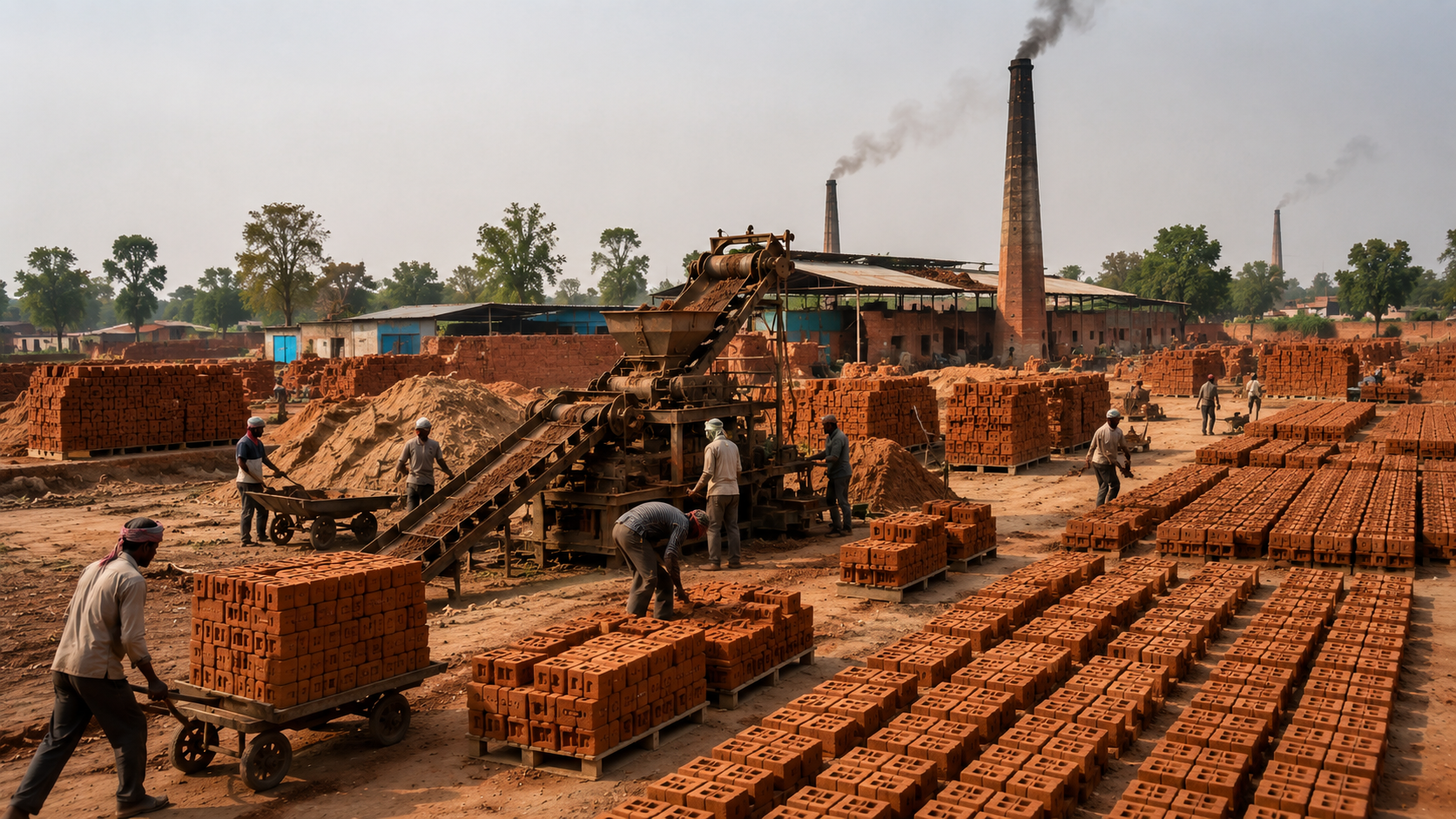
Every brick manufacturing plant in India makes bricks. That part is obvious. But the difference between the best plants and the average ones shows up in your wall five years after construction — not on delivery day.
If you’re sourcing bricks for a project this year, you need to know what separates a serious brick manufacturing plant from a casual one. Here’s what to look for, drawn from our years of running one ourselves.
Modern Equipment Changes Everything
Old brick plants run on the same equipment they used in 1985. Manual moulding, open-air drying, wood-fired clamp kilns. These plants still produce bricks, but the quality swings wildly from batch to batch. One day you get strong bricks. The next day, the same plant ships you weak ones — and nobody knows why.
A modern brick making plant uses computer-controlled extruders, sensor-monitored kilns, and automated stacking systems. Every brick gets the same temperature, the same pressure, and the same drying time. That’s how you get consistent quality across a 10 lakh brick order.
At Mahaluxmi Bricks, we upgraded our entire line over the last few years. The investment was steep, but the results speak through customer feedback — fewer complaints, fewer rejections at site, fewer warranty claims.
Quality Control Isn’t Optional
Cheap brick manufacturers test maybe one brick out of 10,000. Good plants test much more. We pull samples from every batch and run them through compressive strength tests (the brick must hold 100+ kg/cm²), water absorption tests (under 15% is our target), efflorescence checks (no white salt deposits), dimensional checks, and sound tests (a sharp ring means proper firing).
Every test gets recorded. If a batch fails any check, it doesn’t leave the plant. Period.
Raw Material Sourcing Matters More Than You Think
The clay you start with decides 60% of your final quality. Some brick manufacturing plants buy whatever soil they can find cheaply. Others — the smart ones — source from specific deposits with proven chemistry.
We do soil testing every six months. Our clay must contain the right ratio of silica, alumina, and iron oxide. Too much of one mineral throws everything off. We’ve turned down dozens of cheaper clay suppliers because their soil didn’t meet specs.
That kind of discipline shows up in your bricks. They look more uniform. They feel heavier. They sound right when you tap them.
The Kiln Tells the Real Story
Walk through any brick making plant, and look at their kiln. That single piece of equipment reveals more than any sales pitch.
Older plants use Bull’s Trench Kilns (BTKs) — those long, rectangular pits with smoke pouring out. They work, but heat distribution is uneven. Bricks at the centre fire perfectly. Bricks near the edges either burn or stay underfired.
Tunnel kilns and Hoffmann kilns spread heat evenly across the entire load. Every brick gets the same firing time at the same temperature. That’s why our reject rate stays under 3%, while plants using BTKs commonly hit 8-12%.
Sustainability Has Become a Real Issue
The brick industry has a pollution problem — we’re not going to pretend otherwise. But the better brick manufacturers are fixing it. Modern plants now use cleaner fuels, recycle waste heat, and recover fly ash from power plants to reduce clay usage.
Our brick manufacturing plant runs on a combination of cleaner fuel sources. We also recover heat from cooling bricks and pipe it back to dry incoming wet bricks. The result? Lower emissions, lower fuel costs, and a smaller environmental footprint.
If your project needs green building certifications (IGBC, LEED), buying from a sustainable brick making plant helps your score. Mention it to your dealer before ordering.
Workers and Training
Walk into a top-tier brick manufacturing plant, and you’ll notice something unusual — the workers wear uniforms, helmets, and gloves. They look like factory employees, not casual day labour.
That’s deliberate. Trained workers spot problems faster, handle equipment safely, and produce more consistent output. We invest in training because untrained labour costs us in mistakes and accidents.
Delivery and Customer Service
Manufacturing matters, but so does what happens after. Top brick manufacturers treat delivery as part of the product. Our trucks load bricks on pallets, secure them with straps, and unload them carefully at your site.
We also handle complaints fast. If you receive a batch with cracks or off-colour pieces, we replace them within 48 hours. No excuses, no delays.
Why This All Matters to You
You’re not buying bricks. You’re buying decades of wall life. A great brick manufacturing plant produces bricks that outlast their builders. A poor plant produces bricks that crack, fade, and crumble within years.
Spend a little time researching your supplier. Visit the plant if you can. Ask for test reports. Compare a few options. The difference shows up in your finished building — and stays there for generations.
Connect With Us
Mahaluxmi Bricks runs one of India’s most modern brick making plants. We’d love to show you around or send you samples to test yourself. Visit our website or call us — we’ll get back to you within a day.