
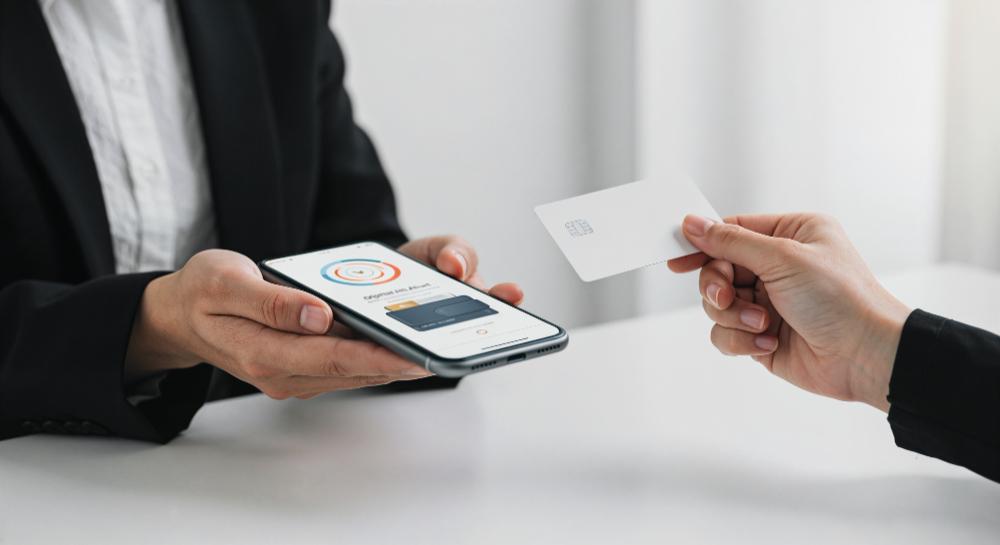
Contactless technology has sneaked into our lives in the current world where people live in a fast paced digital world. RFID card technology is becoming increasingly popular in office access systems, and in transportation for the general population. But what is an RFID card, and how does it work? This easy to understand tutorial simplifies the concept and examines the practical uses and benefits of the concept.
RFID is an abbreviation that is used to refer to Radio Frequency Identification, which is a wireless technology that involves the use of electromagnetic fields to identify and monitor objects automatically. RFID does not need direct contact or line of sight scanning like in traditional systems like barcodes or magnetic stripe cards.
An RFID system is made up of three major components:
This is the tiny chip that is embedded in the card. It contains information like a special identification number.
A device that sends out radio waves and receives signals back from the RFID card.
This contains software and databases which process and store the information which the reader captures.
Once an RFID card enters an RFID reader, it will relay the information stored in it immediately, and the system will be able to authenticate or enable access.
How an RFID card works can be technical, but in reality, it is very simple.
Tapping or moving the card to a reader:
The reader puts out radio frequency signals.
This signal is picked up by the RFID chip of the card.
The chip will reply by sending its stored information.
The information is validated and the action (opening a door or recording attendance) is taken (Potthof et al., 2017).
All this is done within milliseconds, so RFID cards are extremely efficient and user friendly.
RFID cards are not alike. They are usually classified according to their frequency range and functionality.
Low Frequency (LF) RFID Cards.
These cards operate at approximately 125 kHz, and are usually employed in simple access control systems. They possess a lower reading range and are dependable in an interfered environment.
High Frequency (HF) RFID Cards.
They operate at 13.56 MHz and are commonly used in smart cards, contactless payment systems and transit systems. They have superior data transfer features.
Ultra-High Frequency (UHF) RFID Cards.
These cards have higher frequencies and have found their applications in supply chain management and inventory tracking as the read range is longer.
Common Applications of RFID Cards
RFID cards are universal and they find application in many industries. Following are some typical use cases:
RFID cards are used in offices, homes, and secure facilities to enable users to have controlled access without the use of physical keys.
RFID cards are used in schools, colleges, and workplaces to have automated attendance systems which minimize the manual errors.
RFID cards are used to transact business in most of the modern payment systems.
RFID technology is commonly used in metro cards and bus passes to provide easy travel experiences.
RFID cards can be used to control entry, monitor attendees and even facilitate cashless payments at events.
The increase in the use of RFID cards can be attributed to the benefits it has compared with the traditional systems.
Verifications and transactions occur near instantly, minimizing wait time.
All cards include a special ID, which can hardly be duplicated and enhances the overall security.
RFID cards are not easily damaged by wear and tear as compared to the magnetic stripe cards because they do not need physical touch.
RFID systems minimize manual operations, which results in efficiency and accuracy.
They can be easily integrated into existing systems and scaled as needed.
Wireless technologies are usually associated with security issues. RFID cards are not as insecure as such, however, similar to any technology they are not completely safe.
Contemporary RFID-based systems have encryption and authentication measures to secure data. Moreover, there are frequently multilayer security systems in place (checking a PIN or a biometric identification), in addition to using RFID.
RFID cards can be deemed safe and reliable in daily applications such as access control or attendance.
RFID Cards vs NFC: What’s the Difference?
RFID is often mistakenly confused with NFC (Near Field Communication), though they are a bit different.
RFID has wider scope of applications and frequency.
NFC is an RFID, which is used to provide communication over a short distance (typically not more than 4 cm).
Simply put, all NFC devices are based on RFID technology, although not every RFID system is implemented in NFC.
The RFID technology is still developing and more integrated with IoT (Internet of Things). RFID is also contributing to the development of modern infrastructure, whether it be in smart cities, or in enhanced logistics.
The wearable RFID devices, the eco-friendly cards and the cloud-based tracking systems are already entering the mainstream use. With the development of technology, RFID cards are likely to be more secure, efficient and popular.
Choosing the Right RFID Card Provider
To achieve quality and performance, it is crucial to choose a reputable provider. Customization, durability and enhanced security features are some of the features sought by many businesses in selecting RFID cards today.
Other companies such as IVYPrints have also become one of the available applications in the market with customized RFID card solutions being provided to different applications like corporate ID cards, student ID cards, and the access control systems. Selecting a provider, one should pay attention to such aspects of it as the quality of the materials used, compatibility with chips, and printing quality.
The RFID cards have revolutionized the way we communicate with our day to day systems and made the processes quicker, safer and more convenient. Whether one is entering an office, buying groceries or attendance, this little piece of technology is very important in life today.
To novices, RFID is the key to comprehending how seamlessly technology can be incorporated into routine lives. RFID cards are also likely to be a part of years to come contactless innovation primarily due to their ever-increasing adoption.